


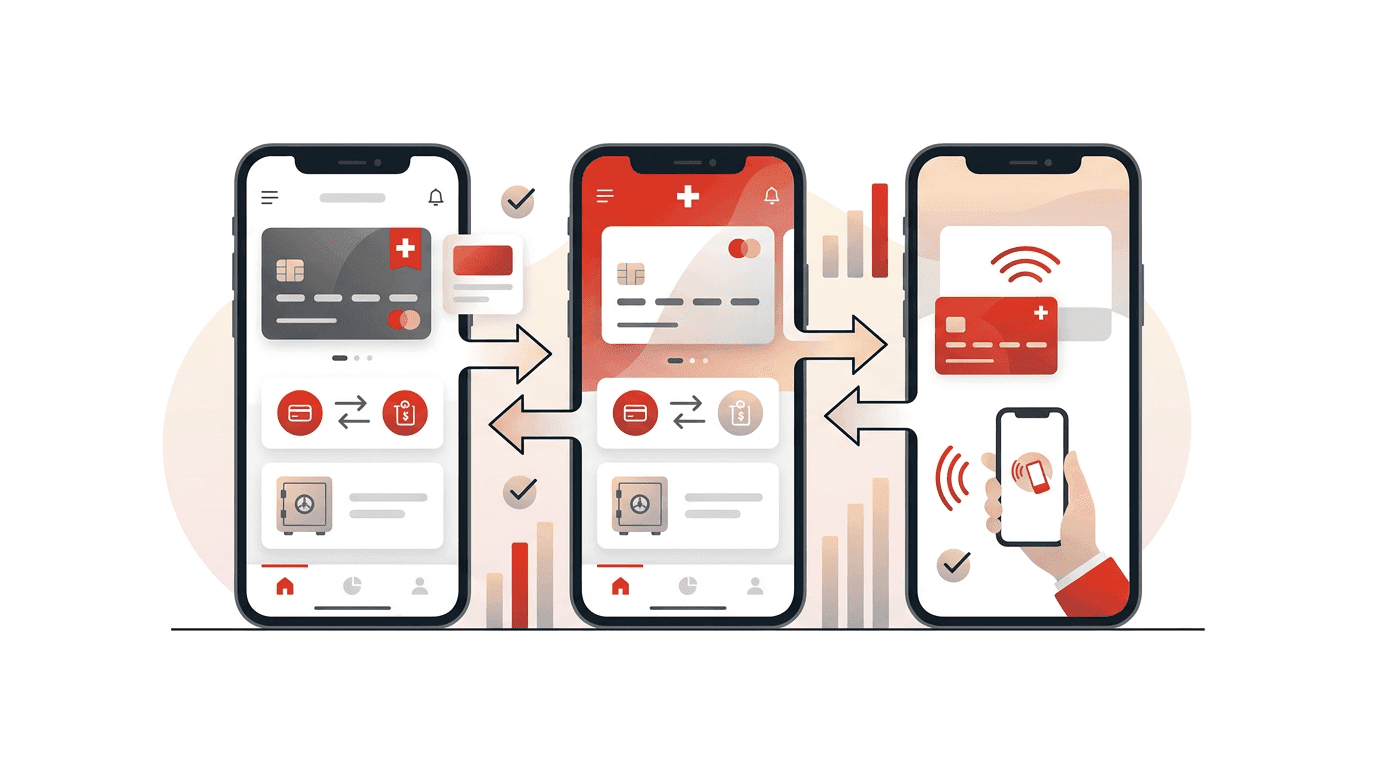
Switzerland has over a dozen neobanks competing for your wallet, yet most people still park their salary at a traditional bank paying CHF 50 to CHF 200 a year in fees for the privilege of a branch they never visit. After testing every major Swiss digital bank myself and analyzing their actual cost structures, here's what you need to know.
May 2026 update: The neobank field shrank in November 2025 when Radicant ceased all operations, removing what had been the only Swiss digital bank with 0% FX markup and no monthly limit. Zak (Bank Cler), Yuh, Neon and Alpian remain as the main FINMA-regulated alternatives.
What Is the Best Neobank in Switzerland?
The best neobank in Switzerland depends on how you actually use your bank. There's no single winner for everyone, but the field narrows quickly once you know your priorities.
For most Swiss residents who want a free bank account for daily use: Neon and Yuh are the top picks. Both cost CHF 0 per month, both give you a Swiss IBAN, and both are regulated under FINMA with CHF 100,000 deposit protection through esisuisse. The main difference? Neon has better foreign exchange rates (0.35% markup vs 0.95% at Yuh), while Yuh includes free ATM withdrawals and built-in investing.
For people who travel frequently or spend in foreign currencies: Neon's 0.35% FX markup is hard to beat among Swiss neobanks. Revolut offers even better rates but doesn't provide a Swiss IBAN, which creates headaches for salary deposits and Swiss QR-bills.
For investors who want banking and investing in one app: Yuh is the clear choice. Built by Swissquote, it offers stocks, ETFs, crypto, and pillar 3a in the same app where you receive your salary.
Here's how the main contenders stack up on the numbers that matter:
| Feature |  Neon (free) Neon (free) |  Yuh Yuh |  Zak Zak |  Alpian Alpian | Revolut |
|---|---|---|---|---|---|
| Monthly fee | CHF 0 | CHF 0 | CHF 0 | CHF 0 | CHF 0 (Standard) |
| Debit card fee | CHF 20 (one-time) | Free | Free | CHF 60 (physical) | Free |
| Swiss IBAN | Yes | Yes | Yes | Yes | No |
| FX markup | 0.35% | 0.95% | 2.00% | Low (varies) | 0% (weekdays) |
| ATM Switzerland | CHF 2.50 each | 1 free/week | CHF 2 (non-Cler) | CHF 2 | Free (5/month) |
| Free payments CH | Yes | Yes | Yes | Yes | Yes |
| SEPA transfers | Free | Free | Free | Free | Free |
| Investing | ETFs (0.5%) | Stocks/ETFs/Crypto | No | Managed mandates | Stocks/Crypto |
| Banking partner | Hypi Lenzburg | Swissquote | Bank Cler | Own license | UK license |
| Deposit protection | CHF 100k | CHF 100k | CHF 100k | CHF 100k | Limited |
Neon Bank Switzerland: The Best Free Option
Neon is the neobank that shows up most in Swiss personal finance discussions, and for good reason. It's genuinely free for basic use, offers excellent FX rates, and does exactly what a daily banking app should: payments, transfers, budgeting tools, and nothing you didn't ask for.
The account costs CHF 0 per month. You get a Mastercard debit card (CHF 20 one-time delivery fee), free domestic and SEPA transfers, eBill support, and Apple/Google Pay. The standout feature is the 0.35% foreign currency markup, which is the lowest among Swiss neobanks and saves you real money if you shop online in EUR or travel in the eurozone.
The downsides? ATM withdrawals cost CHF 2.50 each (though Sonect cash-back points are free), and there's no built-in investing platform. Neon partnered with Hypothekarbank Lenzburg, so your money is held at a real Swiss bank with full FINMA regulation and esisuisse coverage up to CHF 100,000.
Neon also offers a joint account (Neon Duo), which is rare among neobanks and makes it a strong pick for couples. For a detailed head-to-head, check our Neon vs Yuh comparison.
Yuh: Best for All-in-One Banking and Investing
Yuh is a Swissquote subsidiary, and that DNA shows. It's a banking app that also lets you buy stocks, ETFs, and crypto without leaving the interface. If the idea of managing your salary account, investments, and pillar 3a from one app appeals to you, Yuh is hard to beat.
The account is free. The Mastercard is free. You get 1 free ATM withdrawal per week and free payments in Switzerland. SEPA transfers are included. What's not free: the 0.95% FX markup on foreign currency payments (nearly 3x what Neon charges) and 0.50% trading fees on Swiss stocks and ETFs.
Yuh also supports 13 currency accounts, which is useful if you receive payments in EUR, USD, or GBP. And because Swissquote is a fully licensed Swiss bank, your deposits are protected up to CHF 100,000 under esisuisse.
The bottom line on Yuh: Great for the Swiss resident who wants banking, investing, and pension in one place and doesn't travel enough for the FX markup to hurt.
Zak by Bank Cler: Best for Budgeting and Savings Pots
Zak is technically not a standalone neobank but the digital banking app of Bank Cler (owned by Basler Kantonalbank). That distinction matters: your money sits at a traditional Swiss bank with full banking infrastructure, branch access if you need it, and esisuisse protection.
The base Zak account is free with a free Visa debit card. It earns 0.05% interest (tiny, but more than Neon and Yuh's 0%), and offers a savings pot system called "Topfli" where you can allocate money toward specific goals. Domestic payments and SEPA transfers are free.
The downside: Zak's FX markup is around 2%, which is among the worst in the neobank category. ATM withdrawals at non-Cler machines cost CHF 2. And there's no built-in investing, which means you'd need a separate broker.
Zak Plus costs CHF 8 per month (CHF 96/year) and adds free worldwide ATM withdrawals and free FX, making it competitive with Revolut's paid plans. But at that price, you're no longer in "free neobank" territory.
What About Revolut, N26, and Wise?
These three come up constantly in Swiss neobank discussions, so let's be clear about what they are and aren't.
Revolut offers arguably the best FX rates (interbank rate on weekdays) and a slick app with budgeting, crypto, and stock trading. But it doesn't have a Swiss IBAN. Your account runs through a Lithuanian banking license, which means your Swiss employer might not be able to deposit your salary there (many payroll systems require a CH IBAN). Deposit protection is under the Lithuanian scheme, not esisuisse.
N26 is a German neobank with a Swiss offering. It provides a Mastercard, free ATM withdrawals, and decent FX rates. But again, no Swiss IBAN. Your IBAN is German (DE), which creates the same salary deposit issues and means Swiss QR-bill payments require workarounds.
Wise (formerly TransferWise) is excellent for international transfers and multi-currency spending. The FX rates are transparent and competitive. But Wise isn't really a bank: you don't get a Swiss IBAN, there's no domestic payment infrastructure, and it's not designed to replace your primary bank account.
How to Choose the Right Neobank for You
The neobank market in Switzerland is competitive enough that you genuinely can't go wrong with any of the top Swiss options. But your usage pattern determines the best fit.
Daily Swiss Banking
If you live in Switzerland, earn in CHF, and spend mostly in CHF, both Neon and Yuh work perfectly. Pick Neon if you want the lowest fees on everything. Pick Yuh if you want ATM withdrawals and investing in the same app. Both are free, both have Swiss IBANs, both are FINMA-regulated.
Frequent Travelers
Neon's 0.35% FX markup is the cheapest among Swiss IBAN accounts. If you're willing to use a non-Swiss IBAN as a secondary account, Revolut's interbank rates are unbeatable. The ideal setup for frequent travelers: Neon as your primary Swiss account, Revolut for FX spending abroad.
Investors
Yuh is the only Swiss neobank where you can manage your salary, budget, investments, and pillar 3a in one app. Trading fees are 0.50% for Swiss/ETF and 0.50% for foreign stocks. Not the cheapest broker out there, but the convenience factor is real. If lower trading costs matter, consider a separate broker like Swissquote or Interactive Brokers alongside a free neobank.
Expats and Newcomers
If you're new to Switzerland, Yuh accepts residents from Switzerland, France, Germany, Austria, Italy, and Liechtenstein. Alpian provides multi-currency accounts (CHF, EUR, GBP, USD) and personal advisory, which is useful when navigating the Swiss financial system for the first time. Both offer English-language support.
If you live in Switzerland, earn in CHF, and spend mostly in CHF, both Neon and Yuh work perfectly. Pick Neon if you want the lowest fees on everything. Pick Yuh if you want ATM withdrawals and investing in the same app. Both are free, both have Swiss IBANs, both are FINMA-regulated.
Neon's 0.35% FX markup is the cheapest among Swiss IBAN accounts. If you're willing to use a non-Swiss IBAN as a secondary account, Revolut's interbank rates are unbeatable. The ideal setup for frequent travelers: Neon as your primary Swiss account, Revolut for FX spending abroad.
Yuh is the only Swiss neobank where you can manage your salary, budget, investments, and pillar 3a in one app. Trading fees are 0.50% for Swiss/ETF and 0.50% for foreign stocks. Not the cheapest broker out there, but the convenience factor is real. If lower trading costs matter, consider a separate broker like Swissquote or Interactive Brokers alongside a free neobank.
If you're new to Switzerland, Yuh accepts residents from Switzerland, France, Germany, Austria, Italy, and Liechtenstein. Alpian provides multi-currency accounts (CHF, EUR, GBP, USD) and personal advisory, which is useful when navigating the Swiss financial system for the first time. Both offer English-language support.
Are Neobanks Safe in Switzerland?
This is the question that holds most people back, and it's a fair one. Here's the reality.
Every Swiss neobank partners with (or is) a FINMA-regulated bank. Your deposits are covered by esisuisse up to CHF 100,000 per depositor per bank. That's the same protection you get at UBS, Credit Suisse (now part of UBS), or any cantonal bank. The fintech layer on top (the app, the brand) is just the interface. Your money sits at a licensed Swiss bank.
Specifically:
- Neon deposits are held at Hypothekarbank Lenzburg (FINMA-regulated)
- Yuh deposits are held at Swissquote Bank (FINMA-regulated)
- Zak deposits are held at Bank Cler (FINMA-regulated, BKB group)
- Alpian has its own Swiss banking license (FINMA-regulated)
The exception is foreign neobanks. Revolut operates under a Lithuanian banking license, so deposit protection falls under the Lithuanian scheme (EUR 100,000 but different rules). N26 is regulated by Germany's BaFin. These are legitimate banks, but the protection framework is different from Swiss esisuisse coverage.
Bottom line: Swiss neobanks are as safe as traditional Swiss banks for deposits up to CHF 100,000. The app looks different. The protection is the same.
Common Neobank Mistakes to Avoid
Revolut and N26 are great supplementary accounts, but without a Swiss IBAN, you'll hit walls with salary deposits, QR-bill payments, and services that require a CH bank account. Always keep a Swiss IBAN account as your primary.
The difference between 0.35% (Neon) and 2% (Zak) on a CHF 5,000 annual foreign currency spend is CHF 82.50. Over five years, that's over CHF 400. Check the FX markup before picking a neobank, especially if you shop online from EU retailers.
Zak Plus (CHF 96/year) and Neon Metal (CHF 180/year) add free ATM withdrawals and premium perks. But if you withdraw cash twice a month, you're paying CHF 96 to save maybe CHF 50 in ATM fees. Run the actual numbers before upgrading.
Zak has no investing. Neon offers limited ETF access. Only Yuh provides a full trading platform (stocks, ETFs, crypto, 3a). If investing matters, check first or plan to use a separate broker.
The fintech brand is the front end. The banking partner determines your deposit protection, IBAN format, and regulatory framework. Always verify that your deposits are held at a FINMA-regulated institution covered by esisuisse.
My Recommendation: Which Neobank Should You Pick?
After testing every Swiss neobank and tracking my own spending data, here's what I tell everyone: start with Neon or Yuh as your primary Swiss account. Both are free, both have Swiss IBANs, and both are backed by real banks. Pick Neon if you travel or spend in foreign currencies (the 0.35% FX rate saves real money). Pick Yuh if you want investing built in. If you travel a lot, add Revolut as a secondary card for FX spending. That two-account setup (Swiss neobank + Revolut) costs CHF 0 and covers every scenario. Don't overthink this. The biggest mistake is staying at a traditional bank paying fees for services you don't use.

For a deeper comparison of the top two options, read our Neon vs Yuh head-to-head. To compare neobanks against traditional banks on specific features, use our bank account comparison tool. And if you're still unsure which account type fits your needs, check our best private bank accounts overview.
Frequently Asked Questions
What is the best neobank in Switzerland?
For most Swiss residents, Neon and Yuh are the best neobanks. Neon offers the lowest foreign currency fees (0.35% markup) and is ideal if you travel or shop online in EUR. Yuh is better if you want investing, crypto, and pillar 3a in the same app. Both are free, both have Swiss IBANs, and both are protected up to CHF 100,000 by esisuisse.
Is it safe to keep money in a Swiss neobank?
Yes. Swiss neobanks like Neon, Yuh, Zak, and Alpian are all backed by FINMA-regulated banks. Your deposits are protected up to CHF 100,000 through esisuisse, the same scheme that covers UBS or any cantonal bank. Foreign neobanks (Revolut, N26) operate under EU banking licenses with different protection rules.
Do Swiss neobanks offer a Swiss IBAN?
Swiss neobanks (Neon, Yuh, Zak, Alpian) all provide a personal Swiss IBAN. Foreign neobanks like Revolut (Lithuanian IBAN), N26 (German IBAN), and Wise (Belgian IBAN) do not. A Swiss IBAN is important for receiving salary payments and paying QR-bills.
What are the disadvantages of neobanks?
The main limitations are no physical branches (cash deposits can be tricky), limited product range (mortgages and loans are typically not offered), and varying quality of customer support compared to traditional banks. Foreign currency handling varies widely: some charge 0.35% (Neon), others 2% (Zak). Always check the specific fee structure.
Can I use a neobank as my only bank in Switzerland?
Yes, as long as you choose one with a Swiss IBAN. Neon, Yuh, Zak, and Alpian all work as a sole bank account. They support salary deposits, QR-bill payments, eBill, standing orders, and TWINT. The main limitation is cash deposits, which require workarounds like Sonect (Neon) or Bank Cler branches (Zak).