



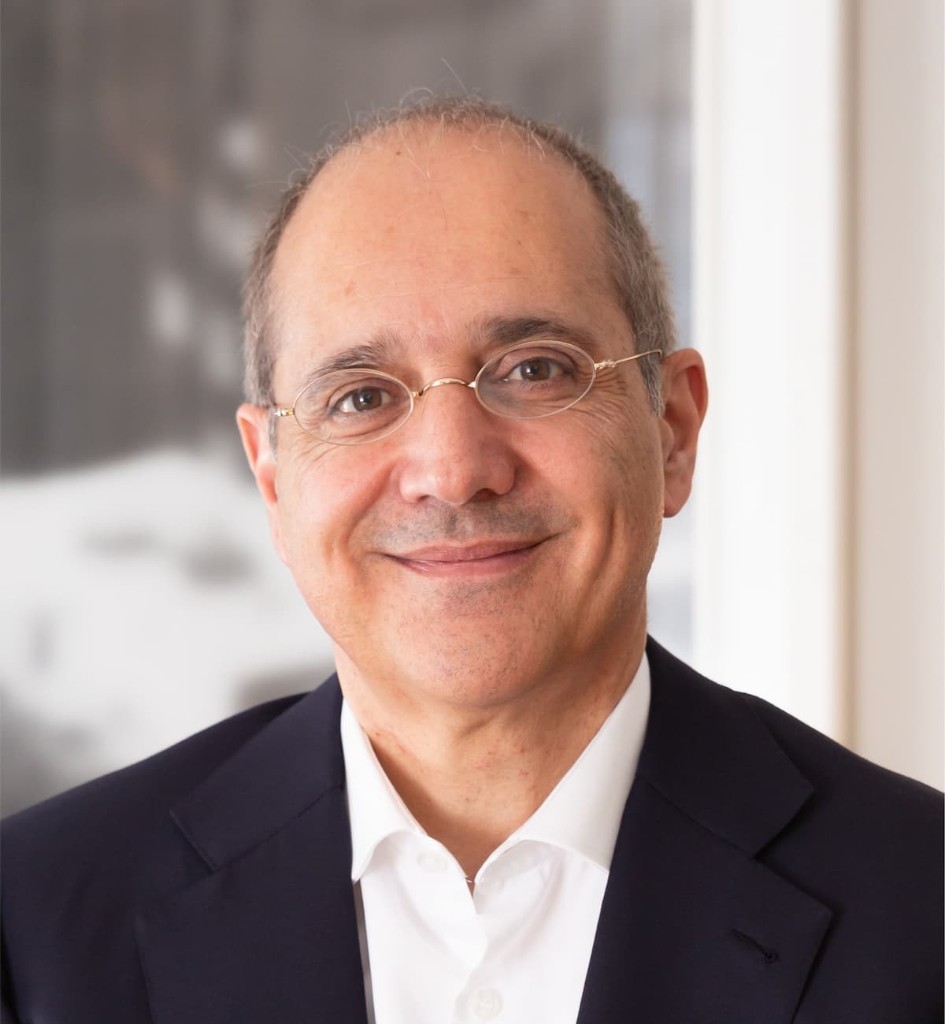
"I wish I had started investing earlier. I would be richer today." That's how Adriano Lucatelli, founder of Descartes Finance, opened our call. After ten years building Switzerland's only independent hybrid wealth platform, he still talks about retirement saving like someone who lost time he can't get back. That regret is also, in a sense, Descartes' product strategy. The company is built to spare you the mistake the founder made on himself.
Built On A Founder's Regret
Adriano spent his early career inside Swiss banking, then taught at the University of Zurich for seven years, then quit the corporate path in his early forties to build the kind of investment platform he wished had existed when he started. That platform became Descartes Finance, an independent FINMA-licensed Swiss wealth manager founded in Zurich in 2016, today running pillar 3a, vested benefits, and free assets on one hybrid platform with a real human advisor included in the flat fee.
When I asked him what his single biggest financial mistake was, he didn't hesitate. Too much cash sitting on his account for too many years. He knew it was wrong. He just didn't act.
That confession matters because Descartes is essentially the institutional answer to it. The 2026 platform is designed so a 25-year-old earning CHF 5,000 a month can start investing for retirement in ten minutes, on autopilot, in a strategy that won't blow up emotionally during the next drawdown.
What makes that promise hold up is who isn't behind the company. Most of Switzerland's biggest pillar 3a names sit inside a bank or an insurer, so the funds they recommend tend to be the funds the parent group manufactures. Descartes has no parent bank and no parent insurer. When they picked Swisscanto for the Index strategy, OLZ for Minimum Risk and BlackRock's iShares for the Bitcoin sleeve, each choice was made on the merits, because no internal product had to be defended.
You can verify that independence on the FINMA register of authorised institutions, where Descartes Finance is listed as an independent asset manager.
"What I would tell my younger self is straightforward: open a pillar 3a in your twenties, not your thirties. The framework is unusually well designed, and the two variables that matter most over a working life are discipline and time. I started later than I should have. Most people do." (Paraphrased from our call, May 2026.)
Is Descartes Right For You?
Provider comparisons usually try to convince every reader they need the same product. We don't. Descartes is built for a specific kind of Swiss saver, and the honest test is whether you recognize yourself below.
Descartes is right for you if
- You've outgrown a basic bank 3a account, but you don't want to be your own portfolio manager via an app alone
- You'd rather pay an extra 0.2% to 0.3% per year and have a human you can actually call than save those basis points and figure everything out alone
- You care that your fund manager isn't owned by your bank
- You have, or will have, more than one pension bucket to manage: a 3a today, vested benefits when you change jobs, and free assets above the 3a cap
- You're curious about Bitcoin but only in a small, disciplined, regulated allocation, not a casino bet across twenty altcoins
You're better served elsewhere if
- Your single most important criterion is the absolute lowest fee in basis points
- You want maximum flexibility to hand-pick every individual fund in your portfolio yourself
- You're a strict DIY investor who genuinely won't flinch in a 30% drawdown and never wants to talk to anyone about your retirement
- You only care about one product (just 3a, just free investing) and don't see yourself growing into a multi-bucket investor
If you're in the second list, this article will save you time. If you're in the first list, the next ten minutes are for you.
The Platform: 3a, Vested Benefits, And Free Investing On One Engine
It's tempting to think of pillar 3a in isolation. In reality, your long-term wealth lives in three buckets, and they touch each other at the moments that matter most: when you change jobs, when you inherit, when you buy a house, when you retire. Descartes' real product isn't a 3a account. It's a single wealth platform that covers all three buckets on the same investment engine.
Pillar 3a is the tax-advantaged retirement account, capped at CHF 7,258 per employed person in 2026. This is where most readers of this article will start.
Vested benefits (Freizügigkeit, libre passage) is where your 2nd-pillar BVG money lives during a gap between Swiss employers. Most people never actively manage it, which usually means it earns nothing in a default cash vehicle at some Vorsorgestiftung. With Descartes, you transfer it once and it gets invested in the same three strategies as your 3a, with the same advisor in the loop.
Invest is Descartes' 3b free-assets product. Once you max out your 3a, the next franc of long-term savings has nowhere tax-advantaged to go. Most Swiss savers leave it on a current account at 0% real return. Descartes Invest puts it to work in the same strategies, with no contribution cap and full liquidity.
The integration is the value. One login. One advisor relationship. One custody bank (Lienhardt & Partner Privatbank, founded 1868). One consolidated view of your retirement architecture.
How The Hybrid Model Actually Works
Descartes calls itself an app, but that undersells it. It's an app, plus a human advisor, plus a Swiss private bank doing custody. The triple matters, because most behavioural mistakes in retirement saving don't happen at onboarding. They happen later, when markets drop 20% and you're staring at your phone at 11pm wondering if you should sell.
The app handles what apps are good at. A risk-profile questionnaire produces a recommended equity quota between 20% and 99%. You pick one of the three investment models. You verify your identity digitally and sign with a qualified electronic signature. About ten minutes, no paper.
The human handles what apps can't. Free video consultations via Calendly, calls, emails, or a walk into the Zurich office. A "Cogito" AI chatbot covers the basic questions instantly, for free. The advisor is most useful exactly when you don't want one. During a drawdown. When you inherit a vested benefits account. When you're 60 and trying to plan the lowest-tax withdrawal sequence across five 3a depots, a vested benefits account, and a free-asset portfolio.
Lienhardt holds the money. Your assets sit in a custody account at Lienhardt & Partner Privatbank Zürich, legally separated from Descartes itself. Your invested securities are segregated assets that never enter the bank's bankruptcy estate, regardless of the amount. The small cash sleeve held alongside them benefits, in addition, from the CHF 100,000 per-client esisuisse depositor protection under Swiss banking law.
Three Investment Strategies, Three Different Theses
Walk through any Swiss 3a line-up and you'll find many flavours of the same cap-weighted passive idea. Descartes does something different: three genuinely distinct theses, each available across five equity quotas (20, 40, 60, 80, or 99%). All three share one conviction: reduce the risk of discretionary decisions. No fund manager picking stocks on conviction. Rules in, rules out. Lucatelli has written about the logic himself in Descartes' own strategy guide, which is worth a read if you want the deeper rationale in his words.
Index: Buy The Haystack
A textbook passive implementation built on Swisscanto Responsible index funds: World ex-CH, Switzerland Total, MSCI World ex-CH, Emerging Markets, plus a small money-market sleeve. At 99% equity, the all-in cost is 0.61% (0.21% weighted fund TER, 0.40% Descartes and Lienhardt). Descartes cut the Index (Passiv) weighted TER on 4 August 2026 after adding lower-cost funds to the index model. That's comfortably below the median for Swiss 3a investment funds, and it includes the human advisor that app-only competitors don't provide.
Descartes Index 100 returned +24.7% over five years, +36.2% over three years, and +4.03% over the last year. That earns it rank #5 of 82 investment funds in our GetRates ranking, the highest-placed product from any non-app-only, non-bank-owned provider in Switzerland. Adriano told me his own free assets sit in plain index ETFs, mostly S&P 500 and SPI. "Super boring," he called it. When the founder runs the same boring index strategy he sells you, it's a useful signal of alignment.
Minimum Risk: The Stay-Invested Insurance
This is the strategy app-only providers don't offer. It's actively managed by OLZ, a FINMA-licensed Bern asset manager, but actively in a rules-based sense, not a discretionary one. The methodology systematically selects equities whose returns are weakly correlated with each other, so the portfolio's overall volatility stays lower than a cap-weighted index of the same names. No single holding exceeds about 1% of the portfolio.
The trade-off is honest. You give up some upside in a roaring bull market in exchange for a smoother ride that you're more likely to stay invested through. If you watched 2022 and noticed your stomach turning, the math says you'd have been better off in Minimum Risk than in a pure global index at the same equity quota, because you would have actually stayed invested. At 99% equity, Minimum Risk 100 costs 0.76% all-in and returned +14.8% over five years.
Minimum Risk BTC: The Asymmetric Barbell
Descartes is one of the rare Swiss pillar 3a providers to include Bitcoin at all, and the only one to deliver it inside a fully managed, rules-based strategy rather than asking you to size the allocation yourself. The 3a and vested benefits version launched in 2026; the same model existed earlier in Descartes Invest.
It's not a crypto bet. It's a barbell. The Minimum Risk OLZ base sits on one end (defensive, factor-built). A small 1% to 5% sleeve of iShares Bitcoin ETP, issued by BlackRock and listed on SIX Swiss Exchange, sits on the other. Because the OLZ base uses its risk budget more efficiently than a cap-weighted index, there's room for the small asymmetric allocation without inflating total portfolio risk.
Adriano described himself on the call as a Bitcoin maximalist, specifically Bitcoin, not crypto generally. He runs a small personal Bitcoin savings plan, well under 1% of his free assets. Minimum Risk BTC is the institutional translation of that view. One specific asset, disciplined sleeve size, defensive base, no casino allocation across dozens of coins. Descartes Minimum Risk BTC 100 returned +20.9% over five years at an all-in cost of 0.74%.
What Does CHF 7,258 A Year Become In 35 Years?
Same person, same age, same contribution. Here's what each Descartes flagship strategy would have produced for a 30-year-old contributing the 2026 maximum of CHF 7,258 per year for 35 years, starting from zero, using each strategy's actual ten-year annualised return. A ten-year window is the right reference for a multi-decade projection because it captures multiple market cycles instead of being skewed by any single bear-market period.
CHF 1'367'589
CHF 1'170'115
CHF 474'479
The headline isn't that one strategy is "better." It's that the differences compound dramatically over 35 years. The Index 100 strategy, at its 10-year CAGR of around 8.4%, projects to roughly CHF 1.37 million. Minimum Risk 100, at 3.4%, projects to around CHF 480,000. That's the price of the smoother ride. And remember, this is just the 3a slice. If you're also using Descartes for vested benefits and Invest, the household-level number grows substantially. To run your own scenario with a different age, contribution, or starting capital, use our pillar 3a calculator.
Where Descartes Fits In The Swiss 3a Landscape
A clear positioning beats a defensive comparison. Most Swiss 3a providers fall into one of two camps. Bank-owned 3a foundations channel you into their parent group's funds and price the relationship via custody, transactions, and product margin. App-only digital providers strip that down to the lowest possible basis points but ask you to navigate every market drawdown alone. Descartes deliberately sits between the two.
The package is hard to find anywhere else: full independence from any bank or insurer, three genuinely distinct investment theses (not three flavours of the same passive index), a managed Bitcoin barbell strategy that, to our knowledge, no other Swiss pillar 3a provider offers in the same rules-based form, Lienhardt private-bank custody, and an actual human advisor whose cost is already inside the flat fee instead of billed by the hour.
The headline cost lands at around 0.68% all-in on the equity-heavy strategies. At a CHF 20,000 balance that is on the order of CHF 60 to CHF 100 a year above the cheapest app-only providers in the market. At a CHF 200,000 balance the gap is a few hundred francs a year. For the saver who answers yes to "I would use the advisor", "I want Minimum Risk", "I want the Bitcoin barbell", or "I'll consolidate vested benefits and free assets with the same provider", that gap pays for itself many times over in the first emotional market drawdown alone.
The independent press has been consistent on this point. BILANZ has named Descartes one of Switzerland's best wealth managers three years in a row, and the WealthBriefing Swiss Awards 2025 recognised it as Swiss Growth Strategy of the Year. The pattern is not an accident. It's what happens when a small, focused, owner-led team is allowed to design a 3a platform from scratch without a parent bank's product catalogue on its back.
How To Set Up Descartes Like A Pro
A few practical moves will get you more out of the platform than the average user. None of them are obvious if it's your first 3a account.
You can open up to five Descartes 3a accounts. At retirement, withdrawing them in different tax years keeps each withdrawal in a lower marginal tax bracket, often saving several thousand francs in withdrawal tax. Adriano himself runs three separate depots across his own architecture.
If retirement is 20+ years away, defaulting to a 20% or 40% equity quota out of vague anxiety typically costs you over CHF 150,000 in foregone returns versus a 99% quota on maximum annual contributions. If 99% feels too aggressive, the Minimum Risk strategy gives you the same equity exposure at materially lower volatility.
The single biggest unforced error in Swiss long-term saving is leaving 2nd-pillar money in a default cash vehicle at a random Vorsorgestiftung after a job change. Once Descartes holds your 3a, transferring vested benefits is a five-minute paperwork exercise.
The CHF 7,258 annual 3a limit fills fast for any disciplined saver. Anything above that has nowhere tax-advantaged to go, but most people leave it on a current account earning nothing. A short call with the Descartes advisor can map out which buckets to fund in which order.
My Honest Take After Reviewing All 82 Pillar 3a Funds
Of the 82 Swiss pillar 3a funds I scored, Descartes is the one I'd send a friend to without a footnote. Not because it's the cheapest. It isn't. What got me is that it sits exactly where most Swiss savers actually live: between the self-service apps that leave you alone with the wheel, and the banks that charge private-bank fees for advice that's often vague. You get the app convenience and a real advisor in one place, at a flat fee you can actually understand. For most people, that's simply the right answer.
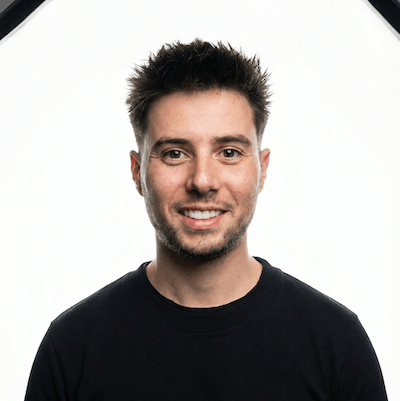
That conviction came from sitting with the factsheets, not the marketing decks. The piece most pillar 3a comparisons skip is the one that matters most over a working life.
Saving for retirement is mostly a behavioural exercise, and the most expensive mistake is selling out of equities during a drawdown because no one reminded you why you bought them. Having a Swiss-licensed advisor on call, included in the price, takes that risk off the table.
Add the managed Bitcoin barbell, the independent ownership, and a platform that scales with you from 3a to vested benefits to free assets, and Descartes is, on balance, the most credible independent option in Swiss 3a today. You can open an account directly with Descartes, or, if you'd like a personalised match across all 82 funds first, try our 3a match tool.
Try The Descartes Pillar 3a Lineup
We've reviewed all 15 Descartes pillar 3a products in detail. The three flagships at 99% equity are the cleanest starting point. The same three strategies are also available across vested benefits and Invest, with the same quotas, fees, and custody.

- All-in cost: 0.61%
- Equity: 99% (Swisscanto Responsible index funds)
- 5-year performance: +24.7%
- Best for: Passive investors who trust the haystack
- Read the full review
- All-in cost: 0.76%
- Equity: 99% (OLZ factor-based equity funds)
- 5-year performance: +14.8%
- Best for: Long-horizon investors who would otherwise panic-sell
- Read the full review
- All-in cost: 0.74%
- Equity: 94% OLZ plus 5% iShares Bitcoin ETP
- 5-year performance: +20.9%
- Best for: Disciplined investors who want an asymmetric Bitcoin sleeve
- Read the full review
Frequently Asked Questions
Is Descartes a bank?
No. Descartes Finance is an independent FINMA-licensed wealth manager founded in 2016 in Zurich. They're not owned by, or part of, any Swiss bank or insurer. Custody of your pillar 3a assets sits with Lienhardt & Partner Privatbank Zürich AG, a separately supervised Swiss private bank founded in 1868.
How safe is my money with Descartes?
Your assets sit in a custody account at Lienhardt & Partner Privatbank Zürich, legally separated from Descartes itself. Your invested securities are segregated assets that remain your property at all times, regardless of the amount, and never enter the bank's bankruptcy estate. The cash sleeve held alongside them, usually small in an equity-heavy 3a, is additionally covered up to CHF 100,000 per client by Switzerland's esisuisse depositor protection. The pillar 3a foundation is supervised by the BVG Oberaufsichtskommission.
What does the Descartes all-in fee actually include?
The 0.61% to 0.76% all-in cost covers a human advisor included in the price, a Swiss private-bank custody relationship with Lienhardt, access to OLZ's factor-based strategies, the BVG-supervised foundation, and a managed Bitcoin barbell strategy that, to our knowledge, no other Swiss pillar 3a provider offers in the same rules-based form. The fee is fully transparent and shown as a single Total Cost figure on every product page, with no entry, exit, or transaction fees layered on top. Pure app-only providers run leaner and price accordingly, which is the right answer for strict DIY savers. The Descartes price is the price of the hybrid model and the broader product range.
Can I really hold Bitcoin in my Swiss pillar 3a?
Yes. A handful of Swiss 3a providers allow Bitcoin exposure, and Descartes is among the few that integrate it inside a fully managed, rules-based strategy rather than asking you to pick the percentage yourself. The Minimum Risk BTC sleeve is a disciplined 1% to 5% allocation depending on your risk profile, implemented via the regulated iShares Bitcoin ETP issued by BlackRock and listed on SIX Swiss Exchange. You don't hold any crypto wallet directly, and the structure is compliant with Swiss pension regulations.
How many Descartes 3a accounts can I open?
Up to five. This matters at retirement. By withdrawing each account in a different tax year, you keep each withdrawal in a lower marginal tax bracket and can save several thousand francs in total. A common setup is one account per strategy, or one account per planned withdrawal year. Adriano himself runs three separate depots.
Written in partnership with Descartes Finance. Methodology, ranking, data, and editorial conclusions (including the "you're better served elsewhere" section) are GetRates' own. Product data sourced from our public database of 82 Swiss pillar 3a investment funds.